In 1606, French engraver Philippe Thomassin, a prominent figure in Rome’s printmaking scene, created an eight-plate Last Judgment. Thomassin’s engraving was successful across land and sea. From the mid-seventeenth to the early nineteenth century, it was used as a source for murals and canvases throughout southern Europe, western and eastern Asia, and in the Iberian Americas. Produced at a time in which the Iberian powers and the Church were engaged in an international struggle against Protestants and the Ottomans as well as set on the conversion of indigenous peoples, Thomassin’s print served as a visual tool in the spiritual and colonial conflicts of the time. My research examines: (1) the visual strategies behind Thomassin’s print in Counter-Reformation Rome; (2) its intercontinental dissemination and hybridization in non-European contexts; and (3) its impact on transatlantic apocalyptic imagery and early modern eschatology.

Ianick Takaes de Oliveira
01.08.-31.08.2025
Gefördert durch die Dr. Günther Findel-Stiftung
Außerdem an der HAB
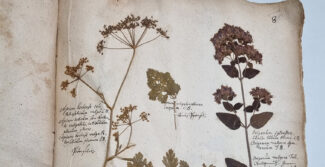
Zeugnis geistlicher Naturkunde und Archiv historischer Biodiversität
Das Herbarium Ruperti ist eine einzigartige, um 1700 angelegte Sammlung mit etwa 1.300 getrockneten Pflanzen ...
mehr
Ein „Mini-Princeton“ in Wolfenbüttel?
In diesem Jahr feiert die Herzog August Bibliothek das 50jährige Bestehen ihres Stipendienprogramms. Ein guter ...
mehr
#18 Die Zeitschrift für digitale Geisteswissenschaften
In dieser Episode von HAB gehört feiern wir das zehnjährige Jubiläum der Zeitschrift für digitale ...
mehr
Aktuelles
Wichtiges, Interessantes und Wissenswertes: Alle aktuellen Informationen rund um Forschung, Bibliothek und Kultur.
mehr
Jobs
Neben den Möglichkeiten einer Ausbildung oder eines Praktikums bietet die HAB weitere Einstiegsmöglichkeiten.
mehr
Ausbildung und Praktika
Als wissenschaftliche Bibliothek bietet die HAB verschiedene Ausbildungsmöglichkeiten. Neben dem Referendariat und der Ausbildung zur/zum ...
mehr
HAB-Repositorium
Diese neue Publikationsplattform bietet allen Interessierten Zugang zu digitalen Daten, die an der HAB entstanden ...
mehr
Publikationen
Monographien, Sammelbände, Ausstellungs- und Bestandskataloge enthalten die Arbeitsergebnisse der Forschung und Erschließung an der HAB. ...
mehr