I came to Wolfenbüttel for the first time in 2009 as a young doctoral student financed by the Rolf und Ursula von Schneider Stiftung. Professor Stolleis, my supervisor at that time, told me that all the books I needed to write a history of public law in the Early Modern Period would be found there. Actually, the library had still more to offer—a community of colleagues who share an enthusiasm for books and for the time to which these books belonged. Therefore I have come back here again, this time not from Frankfurt but from Tokyo, in order to study the sources which Hugo Grotius employed for writing De iure praedae commentarius. Duke August the Younger and his successors collected books beyond contemporary confessional borders. Their collection importantly includes works by Spanish theologians and jurists on which the young Grotius heavily relied. The dialogue between Grotius and those Iberian writers carries me to the East-Asian seas surrounding Japan, where the Dutch and the Spanish-Portuguese were competing for hegemony with jus naturae et gentium as their intellectual weapons. Duke August’s books allow me to look into the conceptual world upon the basis of which Europeans in the early seventeenth-century saw my country.

Atsuko Fukuoka
01.08.2026 - 31.08.2027
Gefördert durch die Alexander von Humboldt-Stiftung
Außerdem an der HAB
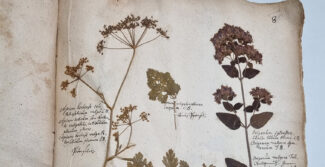
Zeugnis geistlicher Naturkunde und Archiv historischer Biodiversität
Das Herbarium Ruperti ist eine einzigartige, um 1700 angelegte Sammlung mit etwa 1.300 getrockneten Pflanzen ...
mehr
Ein „Mini-Princeton“ in Wolfenbüttel?
In diesem Jahr feiert die Herzog August Bibliothek das 50jährige Bestehen ihres Stipendienprogramms. Ein guter ...
mehr
Aktuelles
Wichtiges, Interessantes und Wissenswertes: Alle aktuellen Informationen rund um Forschung, Bibliothek und Kultur.
mehr
Ausbildung und Praktika
Als wissenschaftliche Bibliothek bietet die HAB verschiedene Ausbildungsmöglichkeiten. Neben dem Referendariat und der Ausbildung zur/zum ...
mehr
HAB-Repositorium
Diese neue Publikationsplattform bietet allen Interessierten Zugang zu digitalen Daten, die an der HAB entstanden ...
mehr
Publikationen
Monographien, Sammelbände, Ausstellungs- und Bestandskataloge enthalten die Arbeitsergebnisse der Forschung und Erschließung an der HAB. ...
mehr