05. September 2025
I was fortunate to attend as a participant from the University of Oxford, joining nine excellent scholars from research institutions across the world. As I have just begun my DPhil (PhD), focusing on the experiences of women at the London Charterhouse, I was especially eager to explore the Carthusian context in a broader European setting, while also deepening my understanding of the medieval period more generally.
The programme featured carefully designed morning sessions (9am to 1pm), striking a balance between lecture-style teaching and seminar-style discussion. Each session introduced new concepts or perspectives, often sparking thoughtful questions and conversations. The atmosphere was supportive, a space where even “silly” questions were welcomed, which I greatly appreciated. This openness allowed us to connect our daily discussions to our own research and to receive valuable feedback from experts and peers.
Our group represented a range of disciplines, topics, and methods, and this diversity fuelled discussions both in and out of the classroom. I found conversations on monastic enclosure, women’s religious experiences, and the “liminal boundaries” between monastic and secular spaces over breakfast particularly formative for my own work. We also supported each other in areas beyond our expertise; I personally learned a great deal from those working in philosophical traditions that are less central to my own research.
Throughout the two weeks, several students delivered short talks on their individual projects. I presented mine in the second week and received incredibly helpful comments and suggestions on potential themes and structure, which I will incorporate in my work.

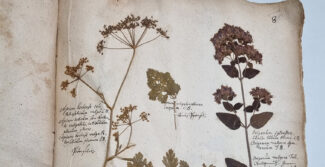
Another highlight of the course was the opportunity to work directly with manuscripts from the Bibliothek’s extraordinary collections—texts that I would never have had access to otherwise! This experience not only expanded my understanding of manuscript traditions (especially marginalia) but also significantly improved my Latin palaeography skills, which was a personal goal of mine for this course.
Afternoons were typically used for personal research. Some participants spent this time examining manuscripts in the reading room, while I focused on secondary literature in the Zeughaus. I had a major breakthrough in understanding one of my primary sources while there – so thank you, Zeughaus! A special thank you as well to Prof. Dr. Aris for his guidance in helping me understand the Carthusian documents that I have been working on.
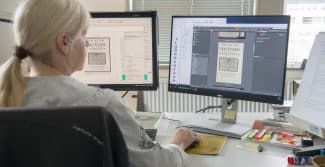
Perhaps the most unexpected but deeply appreciated outcome of this summer course was the strong research community we formed among both lecturers and participants. We connected through lectures, shared meals, field trips, evening teaching sessions (thank you, Estelle, for introducing us to Zotero and digital methods!), and even one unforgettable night of karaoke. These two weeks built friendships and collaborations that span countries and institutions, and that is something that I will truly cherish.
I left the summer course feeling more supported, connected, and confident as a researcher. I am incredibly grateful to the course convenors, instructors, staff, funders, and fellow participants. It was an enriching and transformative experience, and I wholeheartedly recommend it to anyone considering applying in future years.
The author
Victoria Sands is a DPhil student at the University of Oxford. Her research focuses on illuminating the hidden lives of medieval and early modern women who were associated with the London Charterhouse between c.1300 and 1800.
More...